
Case study // B2B SaaS • PropTech

From Bubble technical debt to a production multi-organisation SaaS: eIDAS signature flows, Stripe billing and watertight data isolation.

Client
Excibat • The Promoters’ EDM (PropTech / construction)
Role
Senior Product Designer × Builder (SaaS takeover & transformation)
Squad
Josselin Hillion (Designer × Builder) working directly with Francis (founder & construction domain expert)
Duration
July 2025 → September 2026+ (ongoing production support)
Stack
Bubble • Oodrive Sign (eIDAS) • Stripe Billing • Meteo-Concept • SendGrid • Backend webhooks
  • 100% operational in production
  • Oodrive signatures & recurring Stripe
  • 0 document leakage across organisations
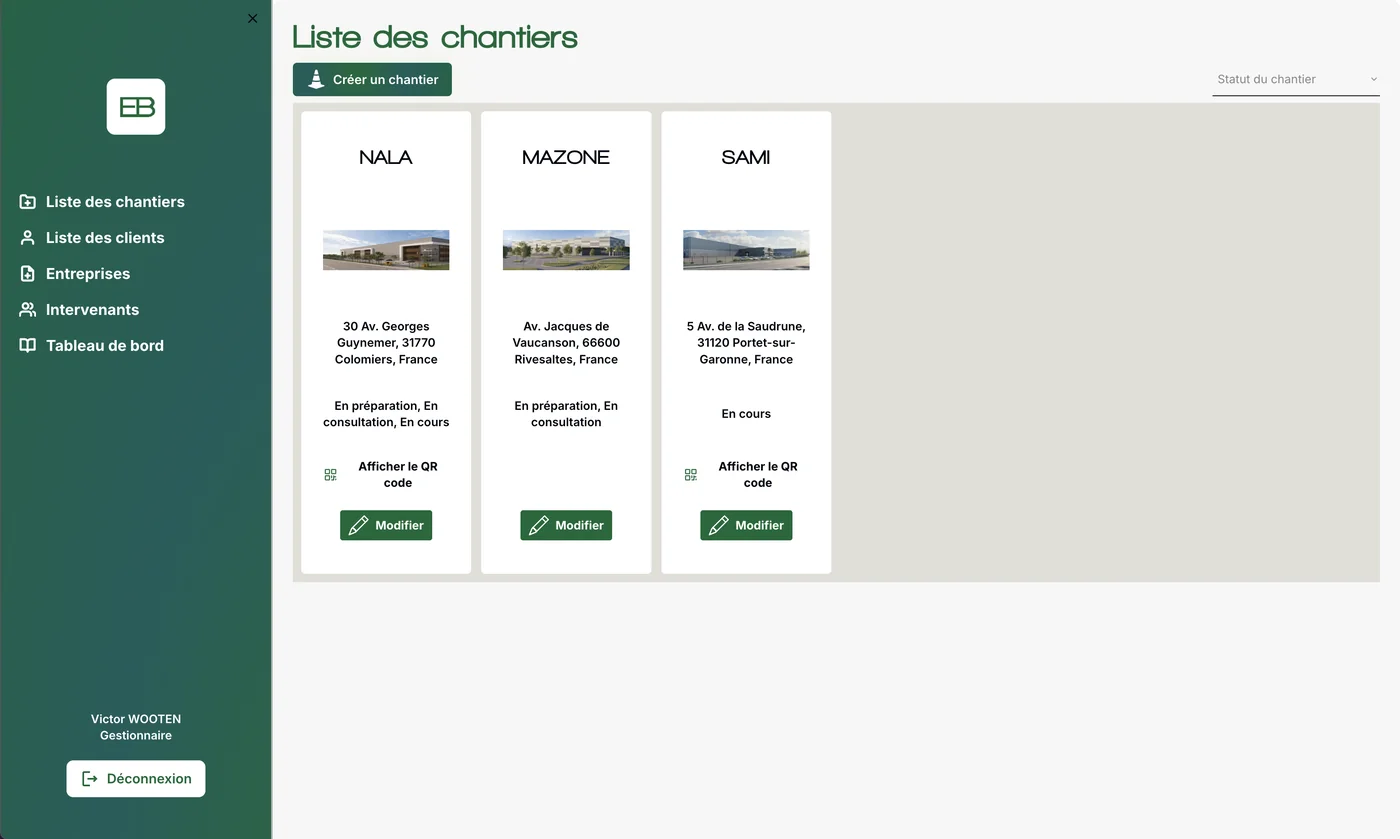
Excibat manager dashboard in production: list of building sites with address, status, QR code and edit action, navigation for sites, clients, companies and contributors.(new tab)Client: Excibat
↳ Property operations manager view: document management and approval flows without friction.
Executive scan // 90 seconds

Mission summary & impact

01 // The challenges
  • Founder’s technical ceiling. Stuck Bubble SaaS architecture, risk of functional drift and unstable front-end debt.
  • Construction domain complexity. Acceptance reports, contractors’ reservations, summons, legal deadlines (GPA, biennial) and progress certificates.
  • Security requirements. Certified eIDAS electronic signatures and automated recurring billing were non-negotiable.
02 // The approach
  • UX & journey redesign. Invisible simplification of the journeys for developers, site managers, architects and end buyers.
  • Third-party API integration. Oodrive Sign (legal e-signatures), Stripe Billing (B2B subscriptions) and a 14-day weather forecast, with no debt.
  • The multi-organisation pivot. Crossed roles uncovered, Organisation / Company split and permissions recomputed by the Bubble backend.
03 // The outcome
  • 100% operational SaaS. Recurring Stripe billing and certified Oodrive signatures in production, with no service interruption.
  • Watertight multi-org architecture. Absolute isolation of files between competing principals, with no visible organisation selector.
  • Zero dev friction. Full founder autonomy, product skills gained and a centralised admin console.
  • 100%operational SaaS: Stripe billing and Oodrive signatures in production
  • < 14 dfrom debt diagnosis to the first programme launch
  • 6 phasesof multi-organisation migration, with no downtime or data leak
  • 0dev friction: full founder autonomy and technical handover
01 // Strategic framing

Setting the scene: brownfield takeover of a construction document app

Moving from a single-organisation tool built for one user to a watertight, scalable multi-stakeholder SaaS platform.

Excibat is an electronic document management and sending application for construction and property development players. The mission was not a greenfield build but a gradual technical and product takeover (brownfield): understanding an existing Bubble app built by the founder and a third party, taming complex APIs and rebuilding the architecture to absorb scale.

The 3 mandates of the design-builder mission:

  1. Secure the legal flows (eIDAS). Map and automate the critical electronic signature chains (amendments, final statements, acceptance reports, reservation-lifting reports) with no legal gap.

  2. Operate the multi-organisation pivot. Deconstruct the single-org data model so that a contractor or an architect can work for several developers without any quote leaking.

  3. Anchor ergonomics in the real building site. Reject agency minimalism to design contrasted, robust screens that match construction professionals’ landmarks.
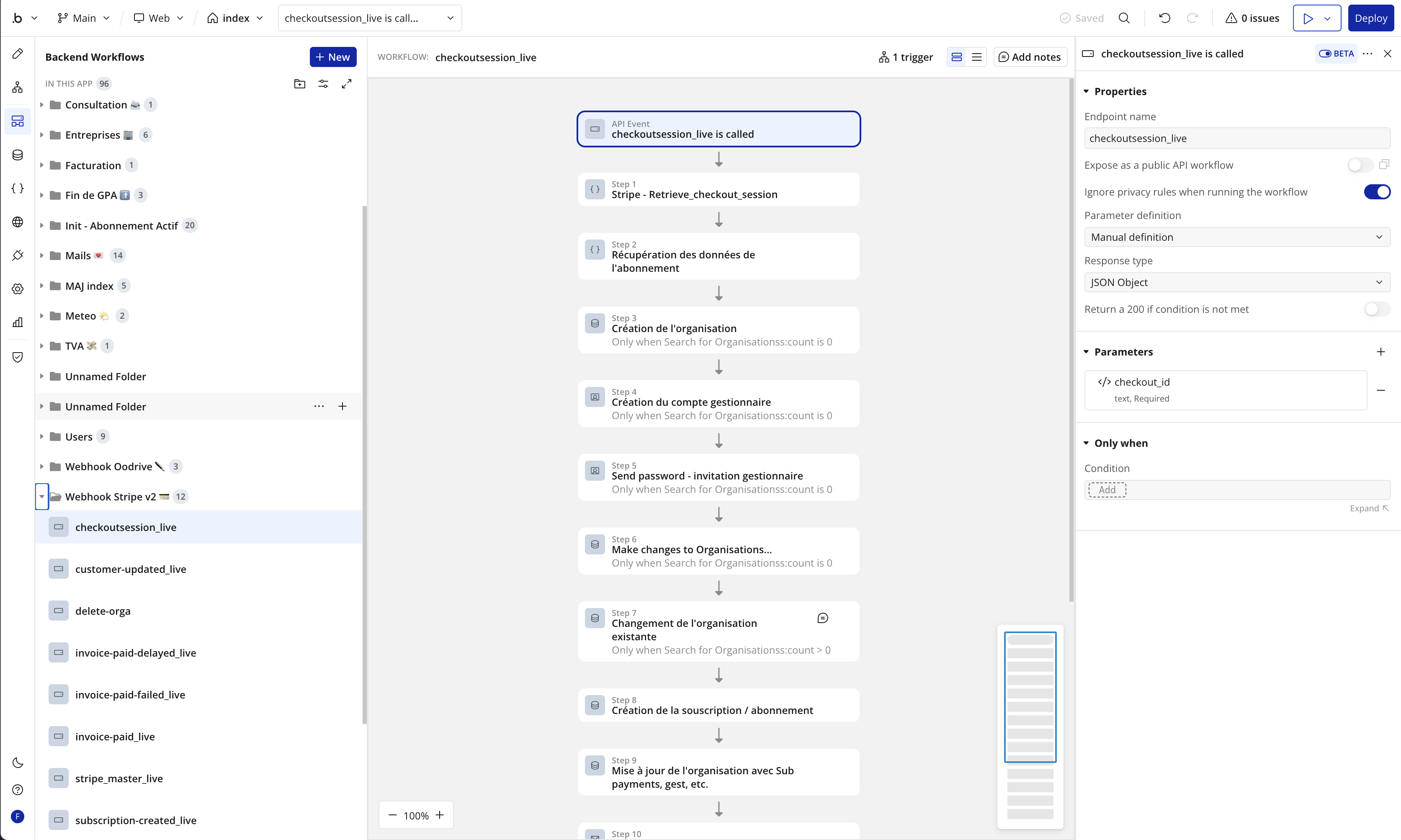
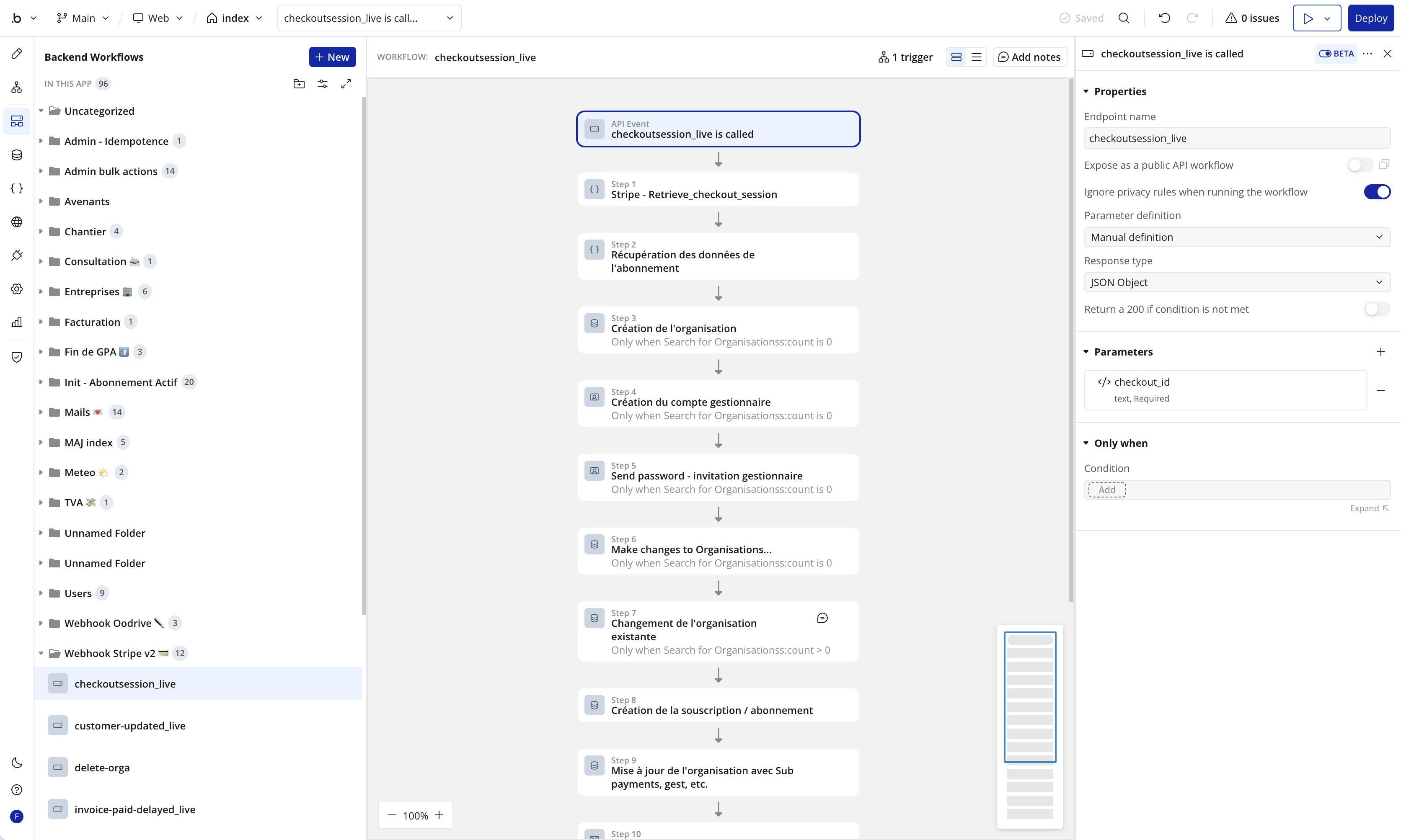
excibat-workflows-backend.png
Bubble backend workflows and webhook API isolating permissions across organisations.Backend workflows // Bubble architectureSecure recomputation of authorisation lists and API triggers.(new tab)
“In construction, a contractor works for five developers at once. If one quote leaks to the neighbour, the software is dead. Isolation must be absolute, without the user ever handling a complex organisation selector.”
Francis, founder of Excibat & property developer
Organisation & governance

Organisation & governance: a direct Designer-Builder × domain expert pair

Domain & field expertise

Francis (founder and construction developer) brings the business vision, tests every brick in real conditions on his sites and arbitrates the legal flows.

Design & fullstack build

Josselin Hillion handles data architecture, UI/UX redesign, Bubble development, API integration (Stripe, Oodrive) and backend security.

Continuous delivery to prod

Zero loss between mock-up and code: every sprint ships features tested right away on real company consultation files.

Act 01 // July – September 2025Phase 1/4

Scoping, taking over the existing app & Oodrive Sign integration

Diagnose the accumulated technical debt, understand signature responsibilities and tame the Oodrive Sign API to secure critical legal document flows.

From the start of the mission in July 2025, the first challenge was to map the documentary complexity of construction: amendments, Final General Statements (DGD), progress invoices, Acceptance Reports (PVR) and Reservation-Lifting Reports (PVLR). Each document follows strict approval statuses and engages the signatories’ legal liability.

Technical exploration quickly exposed the weight of Oodrive’s “all-in-one” API and its submission mechanisms. I architected the API calls and two-way webhooks to trace signature progress in real time, automated VAT rate updates, synchronised e-mail reminder loops via SendGrid and conditioned document access on each user’s status in the project.

  • Oodrive Sign API foundation & webhooks
  • Automatic SendGrid loops
  • Signature flow matrix
  • Bubble debt audit
↳ Oodrive Sign API flow architecture: multi-document submission and real-time updates through webhooks.
Act 02 // September – November 2025Phase 2/4

Functional extension & setting up the Stripe SaaS

Structure the self-service business model and enrich the domain value proposition with contextual building-site services, without disorienting the user.

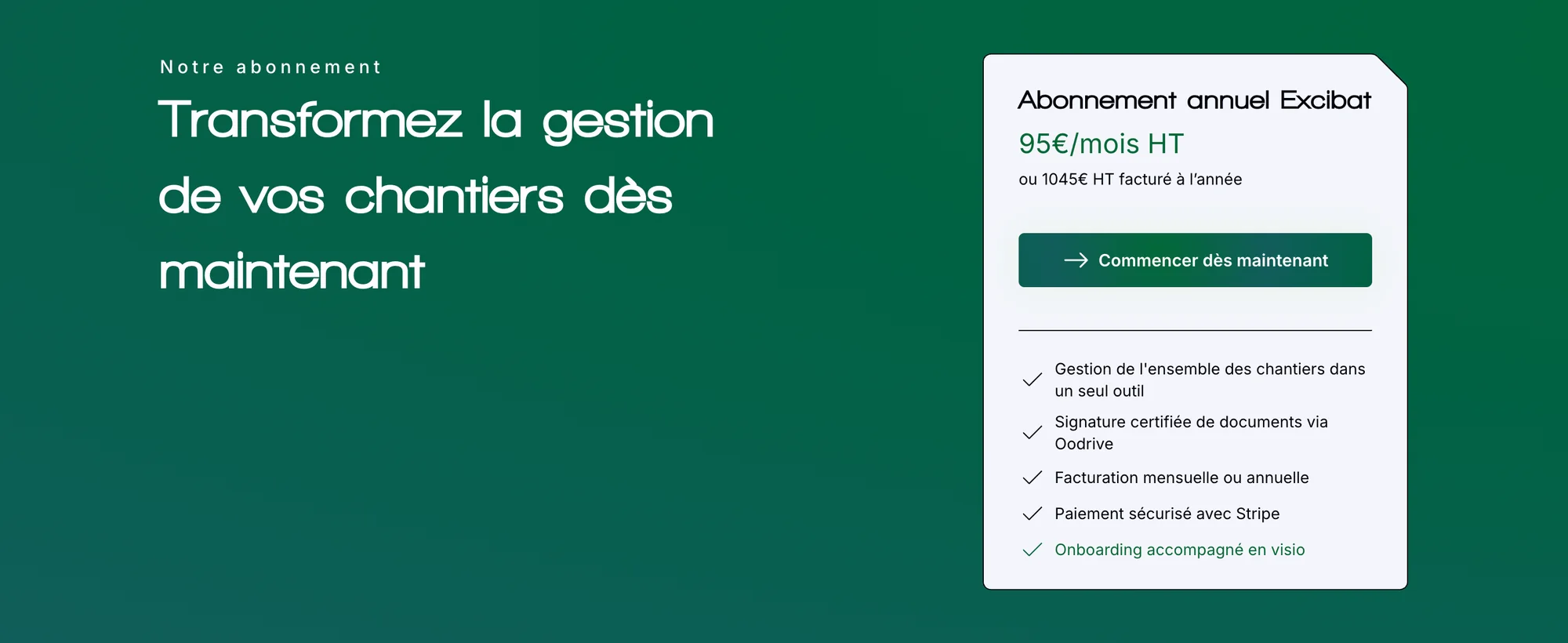
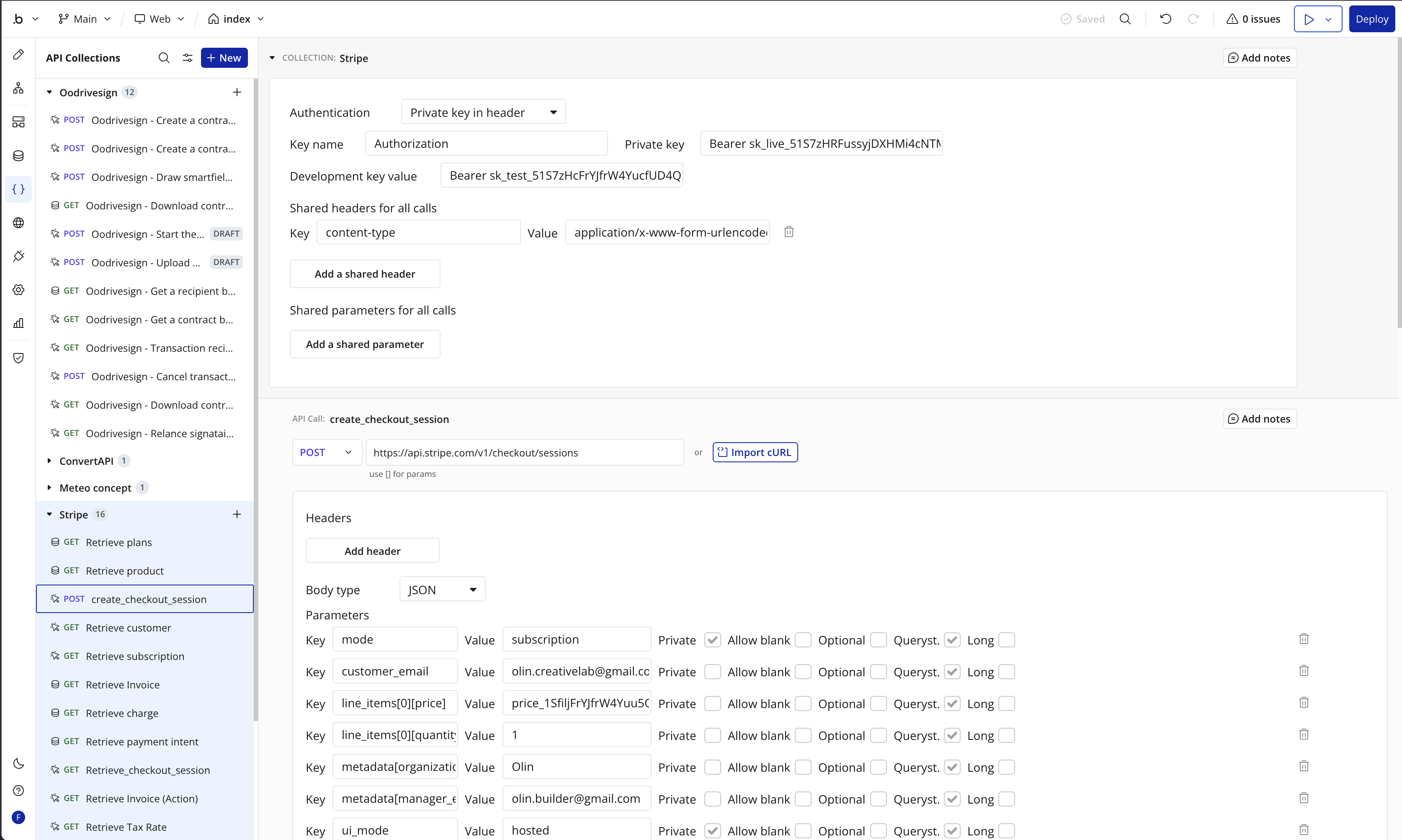
In autumn 2025, we extended the web app towards autonomous SaaS operation. I designed and documented the subscription funnel for the annual plan (paid monthly) through Stripe Checkout, adjusting the architecture so payment does not require creating an account first.

In parallel, the product gained services that are directly useful in the field: Météo-Concept API integration to show 14-day forecasts geolocated on each site, bulk download of tender documents and data deletion management at the end of the Perfect Completion Guarantee (GPA). During the late-November review, in-depth ergonomic work was done on global navigation to guide users step by step and fix critical status anomalies.

  • Stripe Checkout & Billing funnel
  • 14-day site weather API
  • Bulk tender-pack download
  • Phase-guided navigation
↳ The public site’s subscription block: the annual offer and its Stripe Checkout funnel, designed during this phase.
Act 03 // December 2025 – March 2026Phase 3/4

The domain epiphany & the multi-organisation migration

Challenge a single-organisation data model that had become blocking, to align the software architecture with the reality of business relationships in construction.

In December 2025, a major structural finding made the product pivot: an architect or an engineering office works on sites for several different developers, and the same subcontractor works for several organisations at once. The original Bubble model, designed for a single closed organisation, was becoming a dangerous bottleneck for data security.

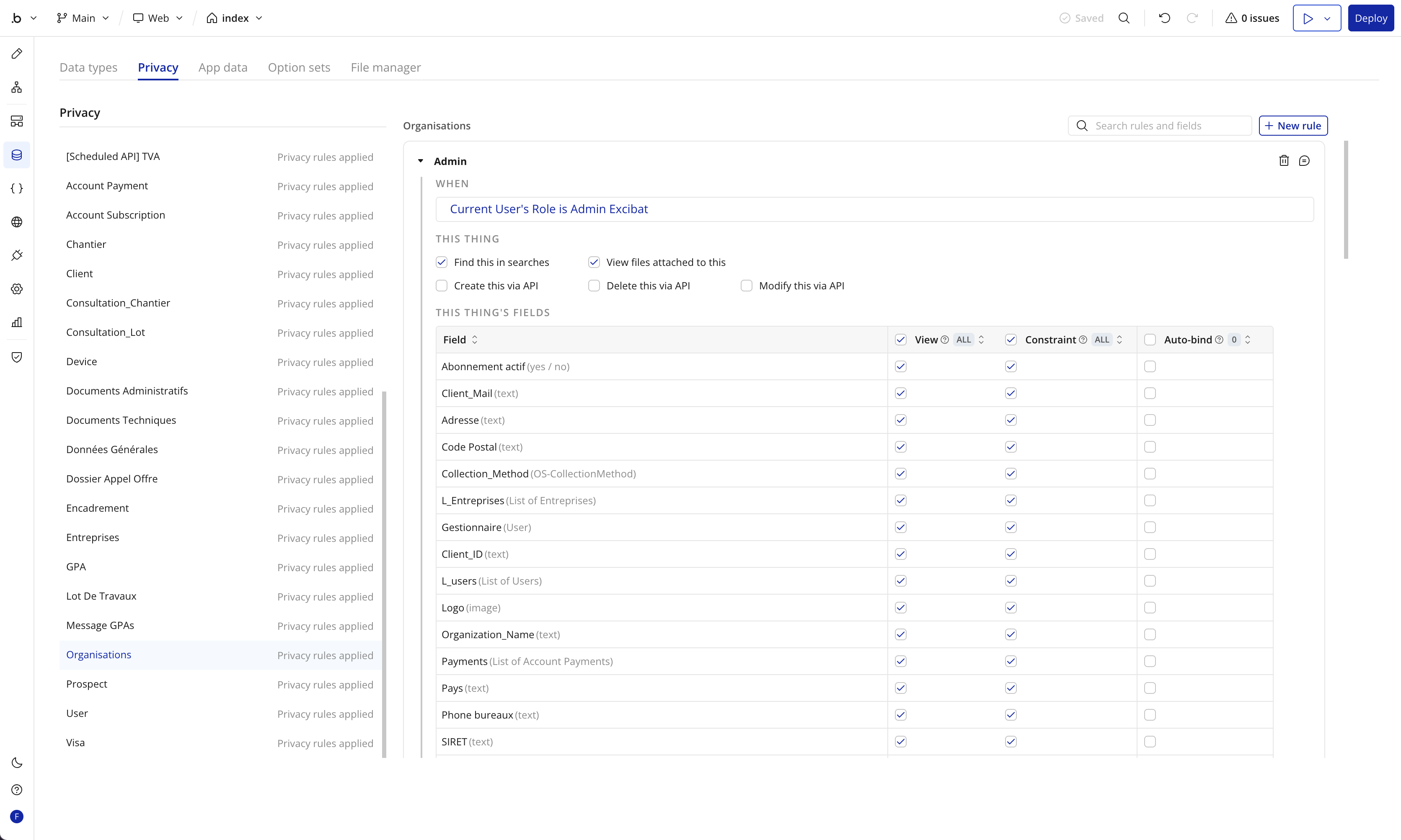
In March 2026, I led the multi-organisation migration in 6 phases. Architecture: strict distinction between the principal organisation and the contributing company. Data migration: lossless reassignment of project history and move of SIRET / VAT attributes to the organisation. Security & Privacy Rules: since Bubble cannot compare two lists in its Privacy Rules, access control was moved into backend workflows that compute explicit lists of authorised people.

Workflow refactoring: project creation, notifications and cascading deletions adapted to eliminate any “ghost” orphan relationship. Transparent interfaces: complexity absorbed behind the scenes, with a deliberate refusal of a visible organisation selector. Multi-account acceptance: cross-validation protocols in test and pre-production.

  • 6-phase migration plan
  • Organisation ⇄ Company model
  • Privacy Rules moved to backend
  • Zero-loss migration scripts
↳ Security architecture: working around Bubble’s limits with explicit authorisation lists computed server-side.
Act 04 // April – September 2026+Phase 4/4

Operational acceptance, field feedback & stabilisation

Rub the tool against field reality with the domain expert, deconstruct agency prejudices (excessive minimalism, rigid automation) and equip the founder for full autonomy.

Excibat’s validation relies on close collaboration with Francis, who is at once sponsor, domain expert and user on his own property operations. His feedback corrected theoretical design mistakes. Manual vs automatic closing: in a construction tender, submitting a bid does not close the file, technical and financial negotiation continues; automatic closing was therefore replaced by a concerted manual action.

Ergonomics adapted to construction: faced with interfaces judged too clean for building professionals’ landmarks, the UI evolved towards more framed, structured and contrasted screens, with a strong identity (signage green, bold typography, historic EB logo kept). Client autonomy: so that Francis does not depend on a contractor for every adjustment, I built a centralised admin page (batch management, technical checks) and documented every workflow.

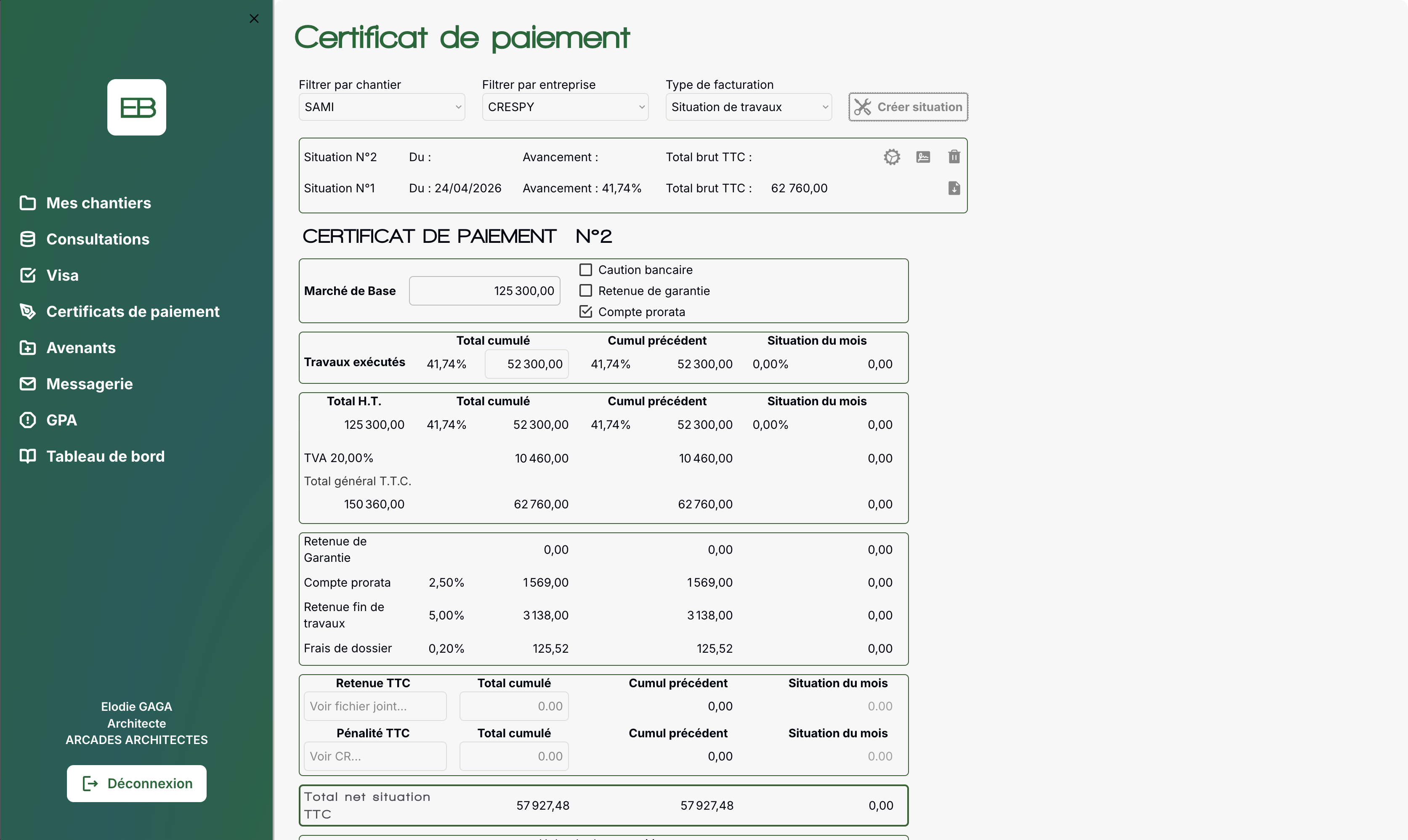
Work continued on making payment certificates reliable (responsive behaviour and progress statements) and on marketing positioning focused on GPA management.

  • Centralised admin console
  • Payment certificates & progress statements
  • Workflow documentation
↳ Financial certification interface: clear excl. / incl. VAT amounts, down-payment handling and the MOE/MOA approval chain.
Level 4 // Senior mastery

The 4 drawers

❖ Builder stanceDesigner–Builder on brownfield codeDiving into technical debt without rewriting everything

Dive into an existing application, decode a third party’s logic, map hidden dependencies and carry out a surgical rework without destroying historical data or interrupting live operations.

Keep a continuous dialogue with the sponsor to prioritise stability before adding new features.

❖ Data & SecurityRelational architecture & Privacy RulesWorking around Bubble’s limits with computed backend workflows

For Excibat, trust is not decreed by a marketing pitch: it is built on the absolute isolation of quotes and invoices between competing developers. Bubble’s technical limits are worked around by computing write-access rights in secure backend workflows, with clean cascading deletions.

❖ Domain humilityListening to the real field vs agency theoryRejecting sterile minimalism and closing tenders manually

Knowing how to set aside designer reflexes (ultra-minimal screens, perfect automation) as soon as the field expert shows that construction needs strong visual frames and human negotiations that the machine does not block:

  • Switching from automatic closing to a concerted manual action after negotiation.
  • Dense screens, stable landmarks and no visible organisation selector to preserve cognitive fluidity.
❖ Senior transparencyField truth & lucidity about metricsOwning continuous operational beta-testing rather than invented metrics

Owning the nature of the learnings: talking about continuous operational beta-testing and production acceptance with an active developer, rather than hiding reality behind fake lab studies or unverified ARR metrics. Valuing technical delivery rigour and client handover.

🎯 The so what? // What this case shows for your products
01 // Multi-organisation

Mastery of dense multi-organisation ecosystems

For demanding B2B products (ticketing, transactional ERPs, fintechs), knowing how to handle fine-grained access rights, strictly isolate competing clients’ data and design flawless recurring financial flows.

02 // Designer × Builder

Hybrid Designer & Builder stance

No more gap between the graphic promise and the reality of code. Able to model the relational database, integrate third-party API webhooks and design intuitive interfaces suited to the underlying technical constraints.

03 // Domain listening

Pragmatism & genuine domain listening

Never design in an echo chamber. Work hand in hand with business users in the field, deconstruct agency dogmas to adapt the tool to real usage and guarantee immediate adoption.

Ready to turn a complex architecture into a smooth B2B product?